Capital Management Services Featured on Receivables Roundtable
Across the receivables industry, diversification is often discussed as a growth tactic. But during a recent conversation on Receivables Podcast, a different theme emerged: one that reframed diversification not as expansion, but as stability.
In today’s collections environment, agencies face compounding pressure: shifting consumer behavior, tightening compliance expectations, client consolidation, and margin compression. Against that backdrop, relying on a single revenue model or service line introduces unnecessary risk. Stability now depends less on volume and more on how effectively an organization uses what it already has.
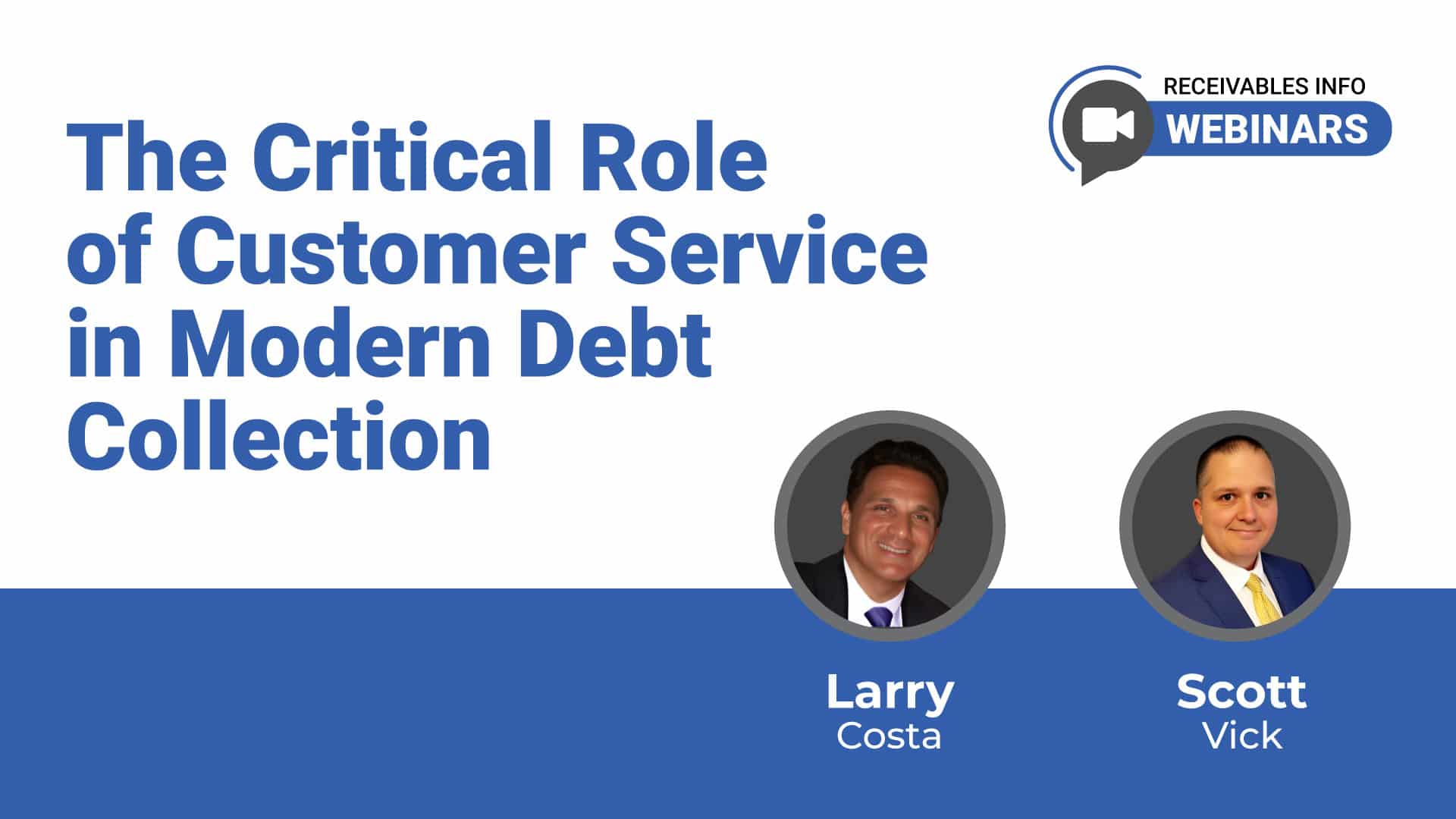
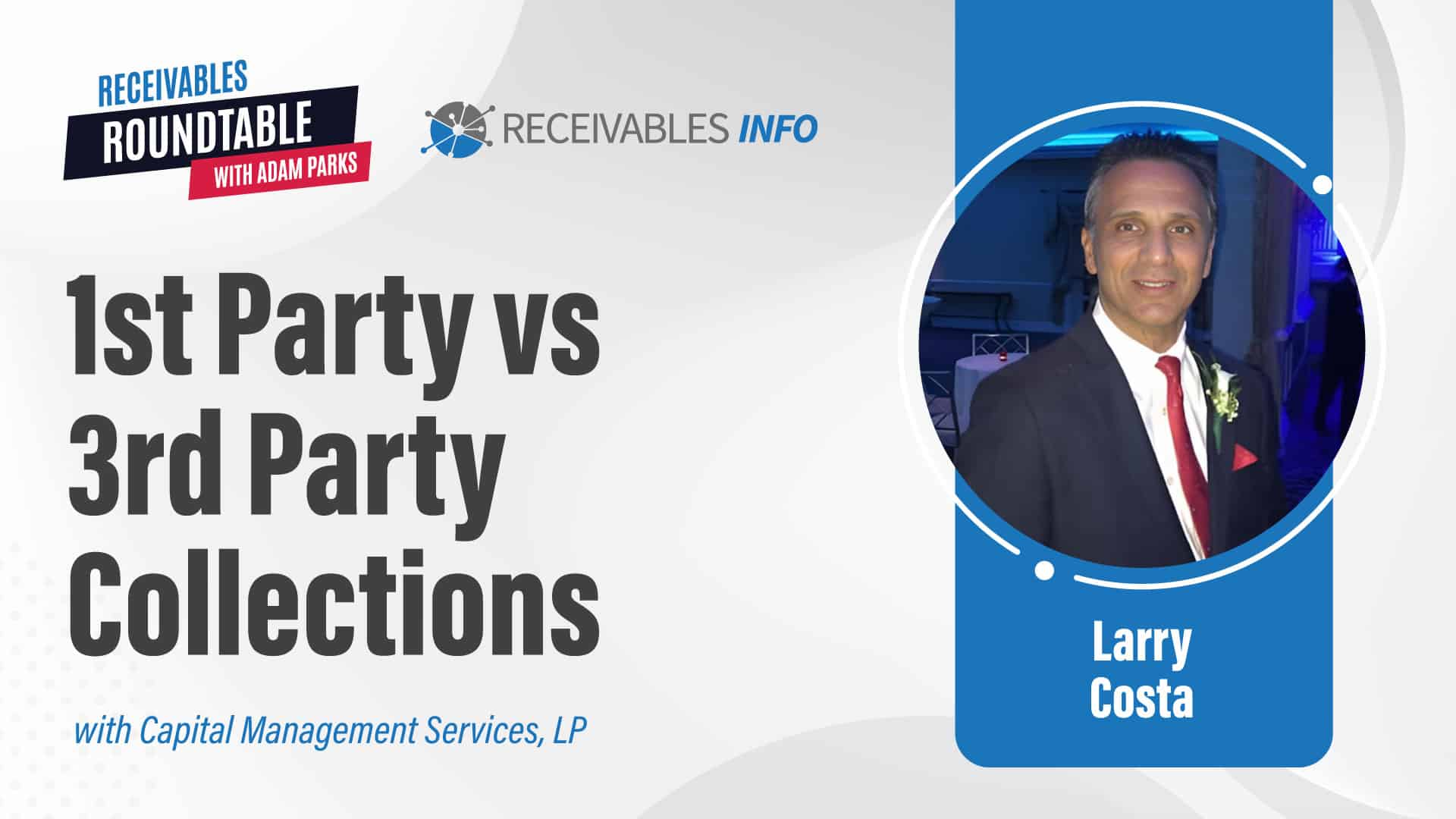
During the Receivables Podcast discussion, Larry Costa, Managing Partner at Capital Management Services (CMS), explored how CMS approaches diversification as an operational discipline. Rather than chasing disconnected opportunities, CMS focuses on expanding services that align with existing infrastructure, staff expertise, and compliance frameworks.
This article expands on those ideas shared on Receivables Podcast, translating them into a broader strategic perspective for creditors, agency partners, and industry leaders. It explores why diversification, when done intentionally strengthens client trust, protects margins, and positions agencies for long-term resilience.
Diversification Is Not About Doing More: It’s About Doing Smarter
One of the most consistent takeaways from the Podcast conversation was that diversification fails when it’s treated as a volume play.
Adding new services without operational alignment often:
- Dilutes management focus
- Introduces compliance blind spots
- Creates staffing inefficiencies
- Erodes service quality
At CMS, diversification is evaluated through a different lens: Can existing infrastructure support this service without compromising outcomes?
This philosophy recognizes an often-overlooked reality in collections: most agencies already possess underutilized assets. Phone systems, compliance frameworks, trained collectors, analytics tools, and quality assurance processes are typically built for peak demand—but sit partially idle during off-peak periods or portfolio shifts.
The discussion emphasized that stability emerges when agencies learn to redeploy those assets across complementary use cases instead of letting them sit dormant.
Talent Redeployment: Preserving Institutional Knowledge
Staffing volatility remains one of the industry’s most persistent challenges. Hiring cycles fluctuate with portfolio volume, while experienced collectors carry institutional knowledge that is difficult and expensive to replace.
During the Podcast with Larry Costa, he highlighted how CMS approaches talent retention through internal mobility rather than reactive hiring or layoffs. The focus is on redeploying skill sets, not replacing people.
By shifting trained personnel between:
- Third-party collections
- First-party servicing
- Customer service support
- Special client campaigns
CMS reduces turnover while maintaining operational continuity.
This approach delivers two strategic advantages:
- Consistency for clients, who interact with experienced staff familiar with compliance expectations
- Stability for employees, who see long-term career paths rather than cyclical roles
Diversification, in this sense, becomes a workforce strategy as much as a revenue strategy: an insight that resonated strongly throughout the discussion.
Infrastructure Leverage: Turning Fixed Costs into Competitive Advantages
Another theme explored on the Podcast was the importance of infrastructure leverage. Many agencies view infrastructure costs like telephony, QA systems, reporting platforms, as unavoidable overhead. CMS views them as scalable assets.
Once compliance, security, and monitoring frameworks are in place, incremental services can often be added at a fraction of the original cost. The key is discipline: new services must align operationally, not just financially.
At CMS, diversification decisions are evaluated against three criteria:
- Operational compatibility
- Compliance continuity
- Client value alignment
This ensures that new service lines enhance, rather than strain, existing systems.
By repurposing infrastructure across service types, CMS increases utilization rates while preserving margins: an operational efficiency that many agencies overlook when diversification is approached too narrowly.
Building Client Trust Through Expanded Capabilities
From a client perspective, diversification is not inherently valuable. What matters is confidence: confidence that an agency understands the full lifecycle of the account and can adapt as needs change.
During the podcast conversation, the importance of client trust surfaced repeatedly. CMS does not present diversification as a menu of disconnected services. Instead, expanded capabilities are positioned as extensions of a single operational philosophy.
This approach benefits clients by:
- Reducing vendor fragmentation
- Improving data continuity
- Simplifying compliance oversight
- Creating consistent consumer experiences
When agencies demonstrate they can scale laterally without sacrificing control, clients gain confidence in long-term partnerships rather than transactional engagements.
First-Party and Third-Party Synergy: A Practical Example
One of the clearest examples discussed on the podcast was the integration of first-party and third-party services.
Rather than treating these as separate business units, CMS aligns them operationally:
- Shared training standards
- Unified compliance protocols
- Consistent reporting frameworks
This allows CMS to flex resources as client needs evolve supporting early-stage engagement, remediation, or recovery without rebuilding teams from scratch.
The result is not just operational efficiency, but strategic optionality. CMS can respond to market changes quickly because diversification was built intentionally, not reactively.
Risk Management in a Diversified Model
Diversification often raises concerns about risk, particularly compliance risk. The podcast discussion addressed this directly.
At CMS, risk increases when services are siloed. It decreases when processes are standardized and oversight is centralized.
Key safeguards include:
- Unified compliance governance
- Cross-trained QA teams
- Consistent documentation and audit trails
By designing diversification within a single compliance architecture, CMS avoids the fragmentation that causes risk exposure elsewhere in the industry.
Why Diversification Improves Margin Stability
Margin stability was another recurring theme on the Receivables Podcast. While volume-driven growth fluctuates with economic cycles, diversified service models smooth revenue variability.
When one segment slows:
- Another absorbs capacity
- Fixed costs remain productive
- Staffing disruptions are minimized
This creates a more predictable financial model, one that benefits not only CMS, but also its clients and employees.
What Industry Leaders Should Take Away
The expanded discussion from the podcast highlights a broader lesson for the industry: diversification is not about chasing trends. It is about designing operations that remain resilient under pressure.
Agencies that succeed:
- Leverage existing infrastructure
- Preserve institutional knowledge
- Align diversification with compliance
- Frame expanded services around client trust
Those principles guide CMS’s approach and continue to shape how the organization evolves alongside its partners.
Conclusion: Diversification as a Long-Term Operating Philosophy
The Receivables Podcast conversation with Larry Costa offered more than tactical insight: it underscored a shift in how successful agencies think about growth.
At Capital Management Services, diversification is not an experiment. It is a deliberate operating philosophy grounded in discipline, alignment, and trust.
As market conditions continue to evolve, agencies that embrace this mindset will be better positioned to navigate uncertainty: not by doing more, but by doing what they already do, better and broader.
For those looking to dive deeper after watching this video, click here to read last year’s article from CMS on why keeping First Party and Third Party collections separate is essential for operational success.
Youtube link: https://www.youtube.com/watch?v=1yieR5yCutM&t=6s
For those looking to dive deeper after watching this video, click here to read last year’s article from CMS on why keeping First Party and Third Party collections separate is essential for operational success.
About Receivables Roundtable
Hosted by industry leader Adam Parks, Receivables Roundtable is a video discussion series from Receivables Info that brings together experts and innovators from across the accounts receivable landscape. Each episode explores timely topics, industry trends, and emerging challenges that impact both professionals and consumers.
Featuring guests from organizations like Capital Management Services (CMS), the series delivers actionable insights and thought leadership for today’s receivables professionals. Subscribe to the Receivables Info YouTube channel or follow Receivables Info on LinkedIn to stay updated on new Receivables Roundtable releases.
About Receivables Info
Led by seasoned ARM industry professionals, Receivables Info is a trusted news platform created for the accounts receivable industry. Its mission is to give a voice to reputable debt buyers, collection agencies, law firms, and industry leaders, showcasing their contributions to the marketplace and the communities they serve. Through timely news alerts, in-depth articles, engaging videos, and other receivables-focused resources, Receivables Info connects and informs professionals across the industry and around the world.